



Your needs give the numbers their purpose.
Weekly strategy informs each day. Calculations shape the food, and the chef turns planned ingredients into meals. Open the working behind the result.
One saved day. Tap any number.
See what shaped it, how it was worked out and where it fits in the plan.
Where this day’s calories come from.
Built like a performance team.
26 specialists on the roster, organised into six jobs. A build draws on the ones its week needs, so not every specialist works on every plan. Each card links to the stages of the journey it shapes.
Built on work by Burke, Areta, Jeukendrup, Aragon and Schoenfeld and dozens more. Where a rule rests on published research, we name the source so you can read it yourself.
See how your week becomes a plan.
The week is planned ahead. Meals, training fuel, preparation and the night’s recovery are considered together, with room to review changes as they happen.
Start with the person, not a standard day.
Your body measurements, goal and training focus set the starting point. Food preferences, cooking choices and your usual wake and sleep times give the plan its practical boundaries.
How this is worked out+Plan the week, including when to fuel.
Chrononutrition means planning when to fuel as well as how much. Confirmed sessions, rest days, wake times and intended sleep shape the week, so eating windows are considered before foods and quantities are chosen.
How this is worked out+Work out the energy for each day.
Resting needs, everyday movement, your body goal and training all contribute. A lifting day, long run and rest day each get their own calculation.
How this is worked out+Set protein, carbohydrate and fat together.
Your training focus gives the plan its starting profile. The work ahead and your body goal shape the daily amounts, then those amounts are distributed across meals and workout fuel.
How this is worked out+Turn the targets into food you want to eat.
Food preferences and cooking choices shape the dishes. Ingredient quantities are calculated for the meal, with the preparation state taken into account so you know what to weigh.
How this is worked out+Carry the timing plan into your day.
The eating windows set during planning become meals, session fuel and drinks at specific times. Estimated digestion helps determine what fits before training, while intended bedtime informs the evening.
How this is worked out+Work out what to take into the session.
For sessions that need it, carbohydrate, fluid and sodium become practical servings and timed feeds. Your chosen fuel products help determine what goes in the bottle or kit bag.
How this is worked out+Plan drinks through the day, with the night in mind.
Drinks are placed around waking and training, with larger amounts earlier and a taper towards bedtime. The aim is to cover the day’s needs without leaving a large catch-up drink for late evening.
How this is worked out+Give overnight recovery a place in the plan.
Evening meal timing, caffeine and any pre-bed food are considered together. An evening protein feed can help meet the day’s needs and support overnight recovery when it has a role.
How this is worked out+Make the meal possible in the time you have.
Only 15 minutes between finishing training and eating? Plan the preparation earlier, so that gap is for reheating, finishing and serving. Cooking fresh can still include getting a particular meal ready the day before.
How this is worked out+Bring shopping and preparation together.
The week’s meals become one shopping list and a plan for getting food ready. See what to cook ahead, what to finish on the day and what needs moving from freezer to fridge.
How this is worked out−Quantities are gathered across the week. Each prepared portion carries storage, thawing and reheating steps.
Specialist roles: Shopper, meal-prep planner · Feeds into 12 · Sources: Food Standards Agency guidance for storage and reheating.
Check the plan and show the working.
Targets, delivered food, timing and recorded constraints are reviewed. You can open the numbers to see the result and any difference from the plan.
How this is worked out+Review changes without starting the week again.
A moved workout, a bigger session or a poor night can change what the day needs. KEXBI considers the new information alongside the existing plan, explains a proposed adjustment and leaves the choice with you.
How this is worked out+One week, read left to right.

Where your calories come from.
Your measurements give the calculation a starting point. Your goal, everyday activity and training help determine how much energy the day is planned to provide.
Your focus starts it. Your training shapes the day.
Strength and power, endurance, hybrid or general wellness give the plan its starting point. Your body goal and scheduled sessions then shape protein, carbohydrate and fat for the day ahead.
Start with you.
Your training focus and body measurements set the starting profile. Building muscle, losing fat and maintaining weight bring different demands.
Read the work ahead.
Session type, duration and event status help describe the day’s load. Intensity also informs session-energy and workout-fuel calculations; it is not one universal multiplier for every macro.
Bring the amounts together.
Protein is reconciled with the existing baseline. Carbohydrate demand is considered alongside the energy budget and fat needs. The resulting targets become portions across the day.
Open the method and research
Protein: the engine combines a focus-specific starting rate, the day’s requested protein and an existing baseline. Body weight and lean mass have different roles; the displayed calculation identifies the basis used.
Carbohydrate: the engine first considers training demand. On lighter days that request is reconciled with energy remaining after protein and fat. On qualifying heavy days, fuelling can take priority over the planned deficit. The subtraction shown below explains this saved day, not a universal carbohydrate formula.
Research: Morton et al. (2018) examines protein supplementation and resistance-training adaptations. Burke et al. (2011) discusses carbohydrate availability for training and competition. These inform the principles; KEXBI’s exact focus rates, load bands and reconciliation rules are product implementation choices.
The same day, worked through.
109.1 kg, 93.9 kg lean mass. The saved calculation includes everyday movement, the body goal and training.

How the food fits you.
Your pantry gives KEXBI the foods you prefer and usually stock. Their nutrients, preparation state and timing suitability help determine which ingredients fit a meal and in what amounts.
Same ingredient. A deeper understanding.
A macro entry tells you what a food contains. KEXBI connects that nutrition to how the ingredient behaves, when it fits and how it is prepared. Explore how ingredients contribute to the dishes in Your week.
Sources: USDA, CoFID, BLS, Open Food Facts, manufacturer labels, University of Sydney GI data. Calculations use the recorded food state and estimated cooking yield.
Calculated fuel. Culinary skill.
KEXBI calculates ingredient amounts around the meal’s planned protein, carbohydrate and fat, drawing on your preferred pantry foods. The Chef creates the dish from those ingredients and quantities, shaped by your tastes, kitchen and cooking choices.
One brief for the whole dish.
The Chef receives the planned ingredients and quantities together. Your taste profile, equipment and available cooking time guide how they become a meal.
Nothing added that is not on your plate.
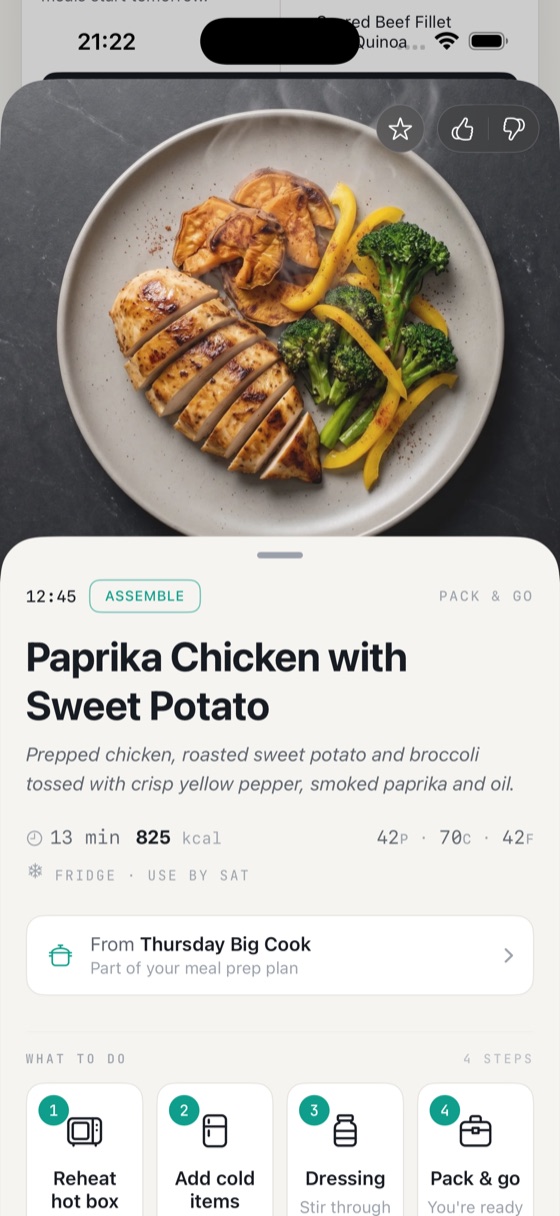
Cooking instructions work with the ingredients and amounts accounted for in the meal. Where suitable, dry cooking or a covered pan can replace added cooking fat.
Slowest first. The main food cooks alone.
Where the dish calls for searing, the main ingredient can rest while the vegetables use the pan. Herbs and acid bring the finishing flavour, with the sequence shaped by the ingredients.
Seasoned in sets, towards your taste.
Flavourings that belong together, drawn from your chosen taste profiles and spice shelf, work within the ingredients accounted for in the meal.
Every vegetable cooked by its family.
Techniques suit the dish: mushrooms can release their water before browning, greens keep their colour, and slower-cooking roots can start first.
Fish gets the pan to itself. Eggs get a method.
For a pan-seared fish dish, vegetables can cook first and be lifted out before the fish. Eggs may be soft, hard, poached or folded, with instructions for the chosen method.
Pasta finished in its own water.
Reserved pasta water can bring a sauce together. Pan sauces use the ingredients accounted for in the meal, with the method chosen for the dish.
Clear cooking cues. Fresh finishing touches.
Follow the cooking, storage and reheating guidance for the dish, informed by Food Standards Agency guidance. For prepared meals, finishing touches such as lemon and herbs can go on after reheating.

We do the timing. You get the time.
The time before training changes what is suitable to eat. KEXBI uses food properties and digestion estimates alongside your schedule to plan the meals and fuel around it.
Every food scored for when to eat it.
A score for eleven moments in a day, from two hours before training through to pre-bed.
The same food can suit one eating window and be a poor fit for another.
Fuel timed around digestion and training.
The kind of protein, solid or liquid, how fast it digests. It is what stops a slow protein landing before a hard morning.
Research-based digestion profiles help place fuel around your training.
Every drink placed and sized.
A baseline from your lean mass, then fluid and sodium for each workout, set by your sweat. Drinks taper as bedtime nears.
Fluid is personalised to your body and workout. During long efforts, drink to thirst.
From an hourly target to a feed.
A separate long-run example from the app shows how workout totals become practical servings. It is not the saved strength day above.
These are the amounts in this example. Workout demand and product limits shape carbohydrate delivery; fluid and sodium are considered together using the available body, sweat and environmental inputs. Mixing water counts towards the fluid plan. The screenshot does not show a sodium total.
See your workout fuel in practice →The food and the targets, checked together.
Targets, ingredient amounts, meal timing and preparation need to agree. Explore the checks and the limits, then see what the saved result actually delivers.
Does it support the work?
The plan checks that your fuel supports training and recovery while staying within its nutritional limits. When under-fuelling is detected, it works to restore the energy you need and flags when your goal is limiting it.
Does it fit your day?
Meals, workout fuel and drinks are coordinated around your training and eating windows. A failed check sends the plan back for revision.
Do the numbers hold up?
The finished plan is checked against your targets. If the selected foods cannot meet one, it shows which macro is short, by how much, why and what would help close the gap.
One coordinated plan, around the time you actually have.
Helms 2014 and Whittaker 2021 for the fat floor, Institute of Medicine 2005 for the carbohydrate floor. These planning limits guide the calculations and checks. Open the example to see its targets, delivered food and recorded result. KEXBI's safety limits are guidance to keep you fuelled, not medical advice or a diagnosis. If something feels off, speak to a clinician or a sports dietitian.
Shaped by you. Worked out for you.
13 shaped by you. 27 worked out for you. Open a group to explore every part.
Ready to stop guessing?
Cohort 002 is testing KEXBI now, ahead of the public launch in November. Leave your email and we will tell you the day it opens.
KEXBI launches in November. Contact us about access.
See how it works ›